3. Inverted Roofs
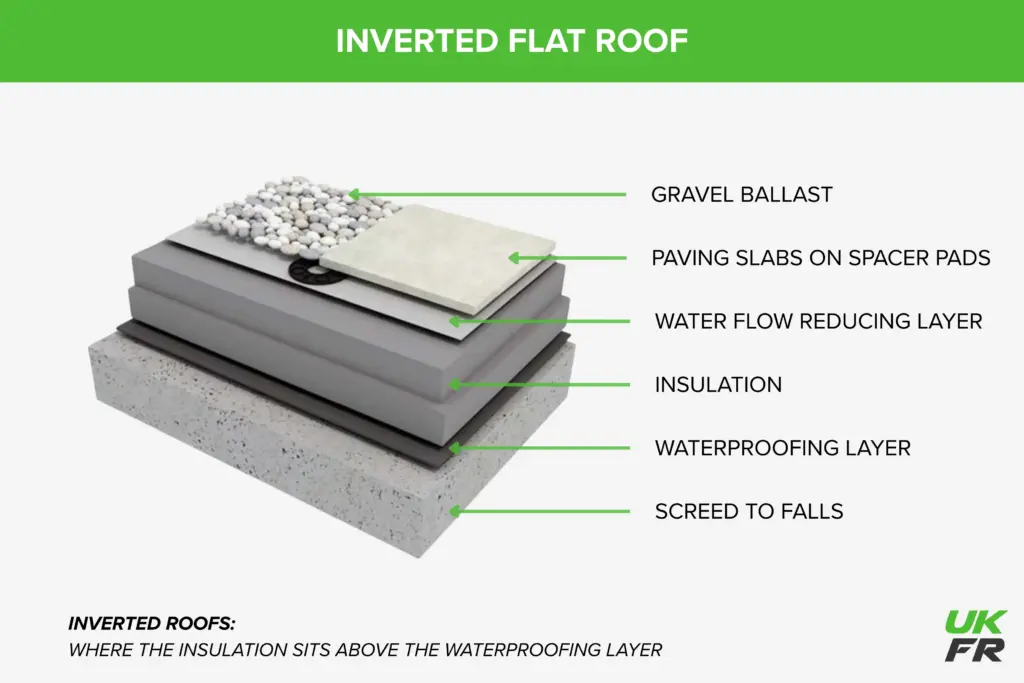
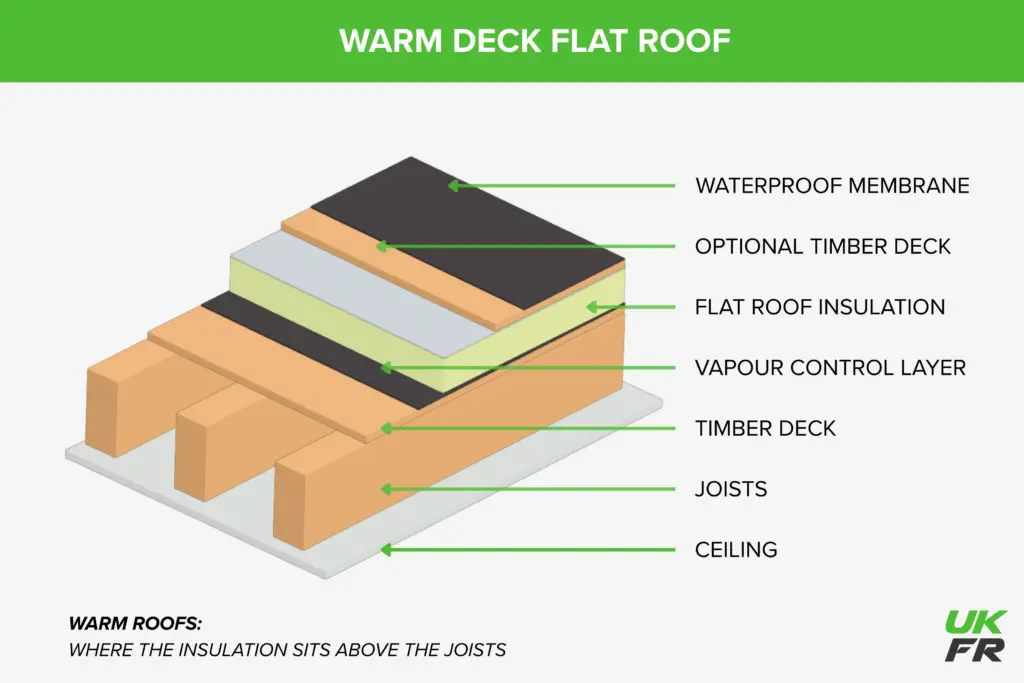
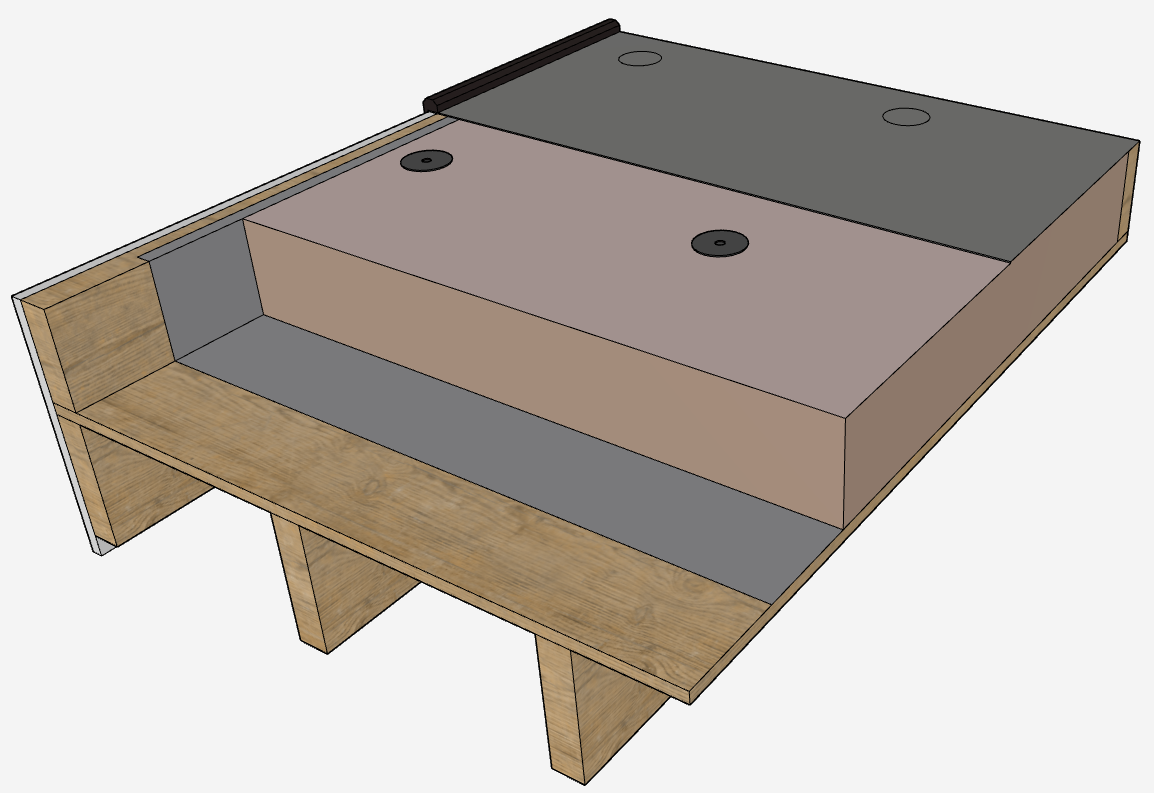
An inverted roof (also known as a protected membrane roof) is where the insulation is installed above the waterproofing layer and structural deck. This is different to traditional warm roofs, where the insulation sits below the waterproof membrane and structural deck.
This setup is commonly used on buried structures, such as green roofs or houses sunken into the ground, and large-scale commercial projects where waterproofing is the highest priority. This would be applications such as podium decks or roof terraces built over other occupied spaces; by placing the waterproof layer beneath the insulation, the membrane is protected from physical damage and heavy footfall, while the layers above take the wear instead.
The insulation used in an inverted roof system must be EPS or XPS insulation. This has a closed-cell structure and is designed specifically to keep out moisture. To ensure the insulation doesn’t move around, it must be ballasted in place, which is often achieved with gravel, paving slabs or a green roof system.
Inverted roof systems are less thermally efficient than warm roof systems, as the materials have lower thermal values. This, however, should not be a deciding factor for an inverted roof, as they are used for risk management; to achieve target U-values, you can simply use thicker insulation.
Installing an inverted roof
The most common way to install an inverted roof is a ballasted system, where the insulation is held in place by weight (typically from gravel, paving slabs or a green roof system).
In this system, the waterproofing membrane is installed directly onto the structural deck, where it acts as both the waterproofing layer and the vapour control layer. This layer must be fully sealed and continuous, as it sits beneath all other components of the roof.
Insulation is installed over the waterproof layer, and a breathable waterproof membrane is then installed on top to allow water to drain. You would then ballast over the top using gravel, paving slabs or a green roofing system.