The differences
Installation
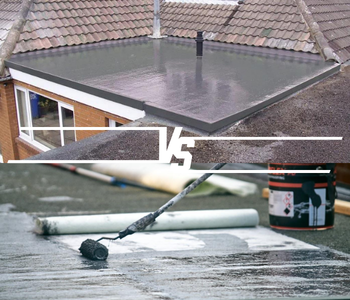
The biggest difference between GRP and liquid rubber is how they’re installed.
GRP
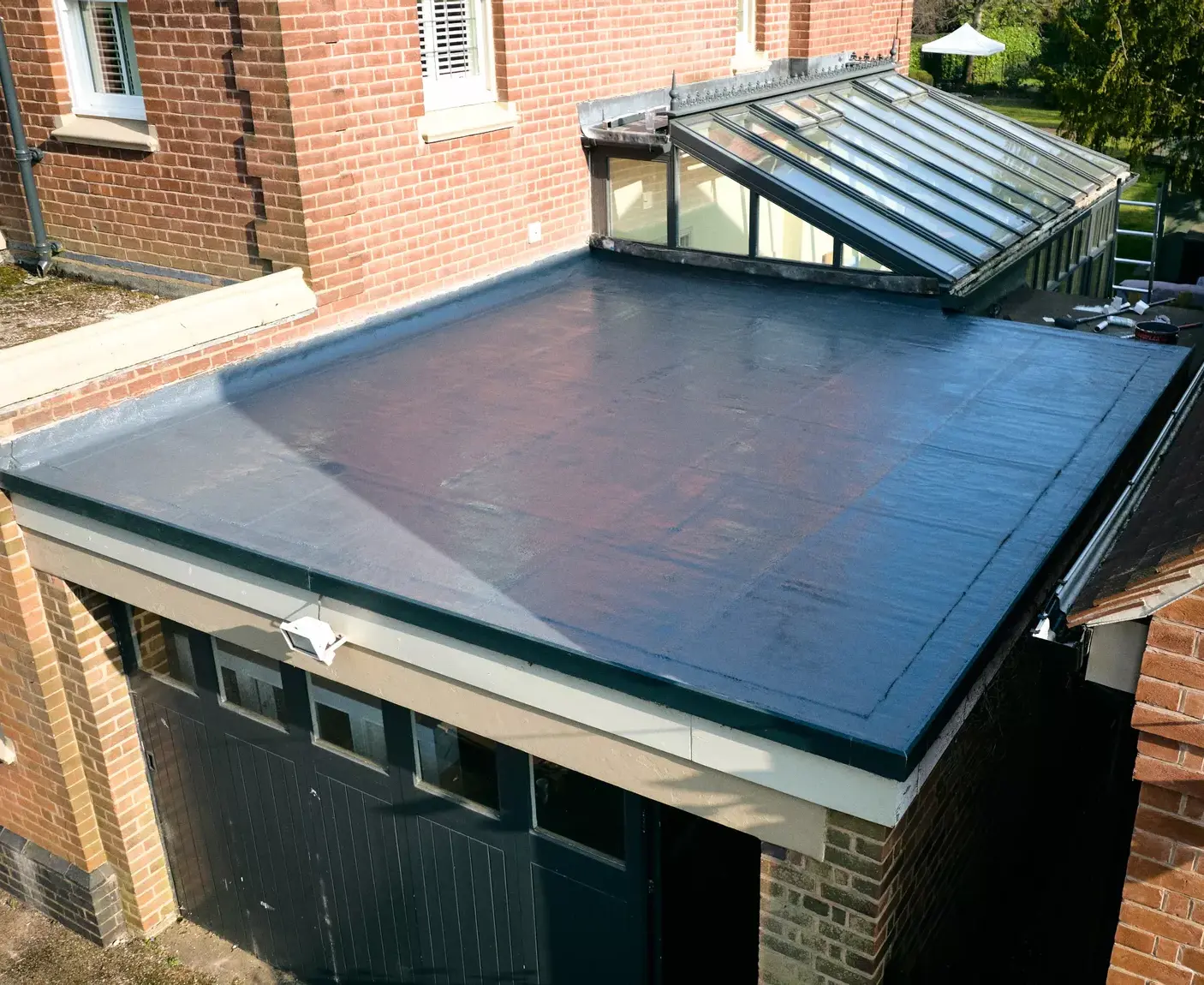
A GRP system works by melting the matting down in the resin to create a solid layer of waterproofing, which is then covered with a top coat to add UV protection. The matting typically requires agitation to ensure it breaks down properly.
There are three thicknesses of matting: 225g, 450g and 600g. Different thicknesses require different tools to break them down.
- 450g and 600g matting are more durable and less flexible compared to 225g matting. These require a bubble buster to break down and release bubbles.
- 225G matting is less durable but offers greater flexibility compared to 450g and 600g matting. This is best suited for systems expecting movement, like an overlay or warm roof. As it’s a thinner matting, it can be broken down using a simple roller.
During installation, the surface must be completely free from pinholes; otherwise, they will become permanent once the surface cures.
Liquid Rubber
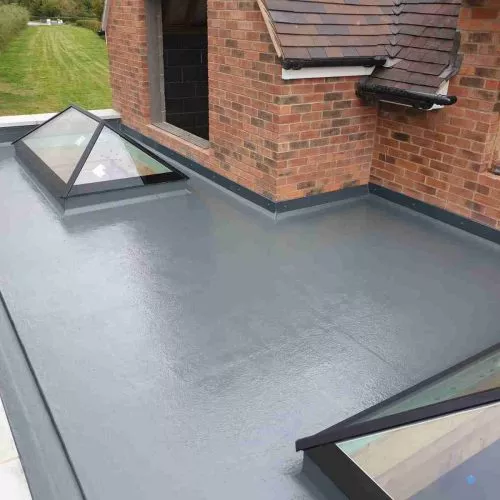
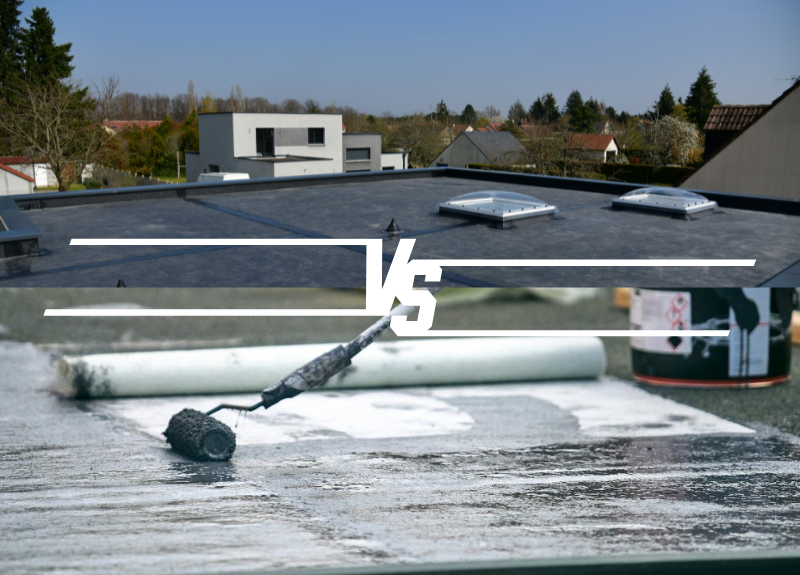
A liquid system uses a 225g matting as a reinforcement layer. Unlike the GRP system, where the matting dissolves in the resin, in a liquid system, the matting stays whole and only needs to be dampened and fully encapsulated within the liquid coating.
The liquid system is applied using a 65-70% base layer, followed by the matting gently rolled in, and then the remaining 30-35% added on top.
It’s important not to apply too much pressure to the matting as it can lead to two main problems:
Problem 1 – There can be too much material sitting above the matting. This leads to a skin forming around the material and not setting below, resulting in big bubbles forming on the surface. This is similar to paint when you put too much on. If this happens, it needs to be cleaned off and applied fresh again.
Problem 2 – Pinholes can form. Similar to GRP roofs, pin holes can form on liquid roofs as a result of trapped air from excessive movement of the liquid. When the liquid settles, the pinholes pop, making them visible in the finished surface. This is bad as it can let water in, leading to dampness and rot within the building structure.